
The Changing Face of Darling Square
In the time before white settlement the area around what we know as Darling Square in East Melbourne was swampland, and was a source of plentiful foodstuffs enjoyed by the local Wurundjeri people. However, it was not long before white people made ‘improvements’. Bit by bit the edges were drained and filled and divided into building allotments. The last four allotments sold were in Darling Street on 3 August 1869. Darling Square itself remained a neglected wasteland.
On 13 December 1875 The Age published a letter from local householder, Diedrich Henne. He wrote, ‘In addition to its numerous holes and puddles full of stagnant water, somebody upset a load of stable dung on top of them, … In these times, when a fearful epidemic is raging, something more should be done than issuing circulars to householders, advising them how to keep their houses and yards clean.’
Diedrich Henne wrote with some feeling as his two young children had died of an infectious disease the previous year.
Contemporary with this unflattering description of the land local football games and cricket games were regularly held there. Playing conditions would seem to have been less than ideal.
Maybe the unkind remarks of Henne and others prompted the Council to think about a plan. A move by the government to subdivide the land and sell it as housing lots had already been discounted. A scheme to build a children’s hospital was also rejected. In July 1876 the Council resolved to request the Board of Land and Works to reserve the land permanently for recreation and ornamental purposes, and that a grant be issued. The grant was eventually issued on 19 July 1880.
In the meantime, in July 1877 the Council resolved that the square ‘be planted, and proper walks made therein’ Six months later the council undertook to fill up the land, and ‘it was suggested that the residents in the locality might subscribe the money necessary to fence in the reserve.’ It was not until October 1879 that a contract for fencing was finally let, at £193 ($386).
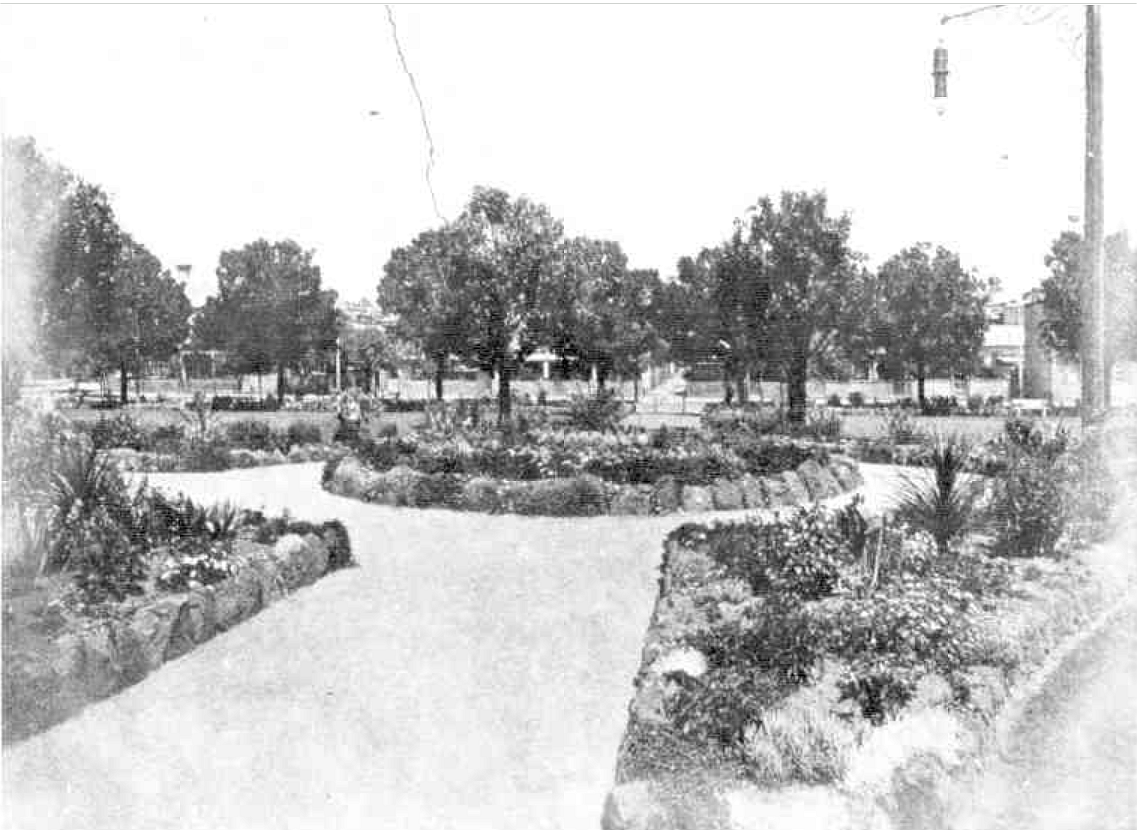
By 1911 the Council had decided to remove the white picket fence in the spirit of beautification. The Australasian, on 28 January 1911, featured some before and after photos. One shows the square as it was originally laid out. The gravel paths were laid parallel to the surrounding streets, and the plan included raised garden beds edged with scoria boulders.
It is not clear when the new layout of diagonal paths and open lawn came into being, possibly the 1950s. But whatever the layout the Square has remained a place for meeting and eating, with picnics particularly prevalent during the summer months.
This article first appeared in Inner City News, November 2025
- 19 reads
-
